Katniss Everdeen doesn't volunteer as tribute because she wants a revolution. She volunteers because her little sister's name just got called and nobody else is going to do a damn thing about it.
That moment. The silence in the crowd. The hand that goes up because the body won't let it stay down. That's what the rebel brand archetype feels like when it's real. Not a performance. Not a brand strategy you read about in a marketing book. A physical inability to stay quiet when something is wrong.
She refuses to kill her companion to win. She fires an arrow into the force field because the system itself is the enemy, not the other players trapped inside it. She disobeys the kill order on President Snow at the end because her moral compass runs deeper than anyone's instructions, including the people on her own side.
That's a rebel with a cause. That's where this archetype lives when it's not being cosplayed.
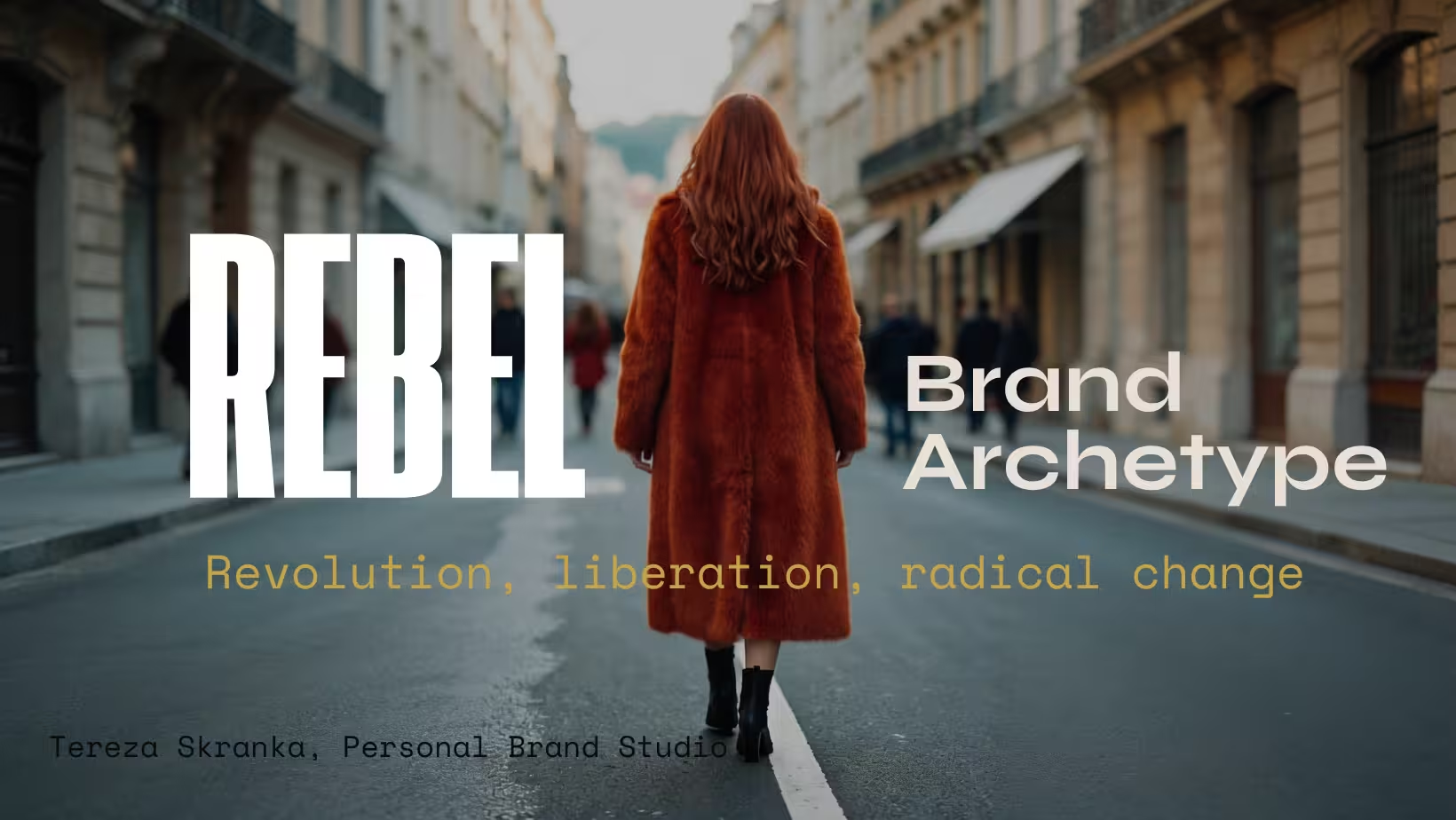
Rebel Brand Archetype
"Rules are made to be broken."
What the Rebel Brand Archetype Actually Is
The rebel brand archetype is one of 12 brand archetypes rooted in Carl Jung's psychological framework. Also called the Outlaw or the Maverick. Its core desire is liberation. Its deepest fear is powerlessness, or being absorbed into a system that kills what makes someone real. Its gift is radical honesty and the willingness to burn down what doesn't work so something better can exist.
Most articles will tell you the rebel is the "outlaw." The bad guy. The one who breaks rules for the thrill of it. And that's a misunderstanding so fundamental it's almost funny.
The rebels I work with, the ones I recognize in myself, are the ones with the deepest moral standards. They don't break rules because rules annoy them. They break rules because the rules are hurting people and nobody else seems willing to say it out loud.
I'm a former Global Lead Auditor. I spent years inside Fortune 500 companies analyzing systems, finding where things break, rebuilding what doesn't serve the people inside them. Now I run a rebel brand. I don't ride a motorbike. I've maybe driven a scooter. I wear leather because I like the texture, not because I'm performing an identity. And I refuse to do marketing the way everyone tells me to, because the traditional model makes me feel like I'm doing teleshopping. The webinar-to-pitch-to-10-emails-to-bonus-stacking model? I physically can't do it. My body says no.
That's the part nobody writes about. Rebels aren't just "edgy." We're people who feel it in our bodies when something is off. And we'd rather burn the playbook than follow it knowing it's wrong.
Rebel Brand Visual Identity
Rebel is CONTRAST. That's the visual principle underneath everything. Not just "dark and edgy." Contrast. Unexpected combinations that create tension and make you look twice.
Black-first palettes with sharp interruptions. Raw textures next to clean typography. Soft color palettes delivered with aggressive layouts. The visual language of a rebel brand should feel like it's breaking a rule you didn't even know existed.
When I build rebel-coded visuals for an AI photoshoot, the images carry tension. Dark editorial lighting. Hard angles. The subject looks like they have something to say and they're not going to soften it for you. But the intensity isn't random. It's precise. That's the auditor in me. Every visual choice maps back to the brand's actual identity, and the archetype analysis is what tells me which kind of rebel we're building.
Rebel Brand Visual Direction
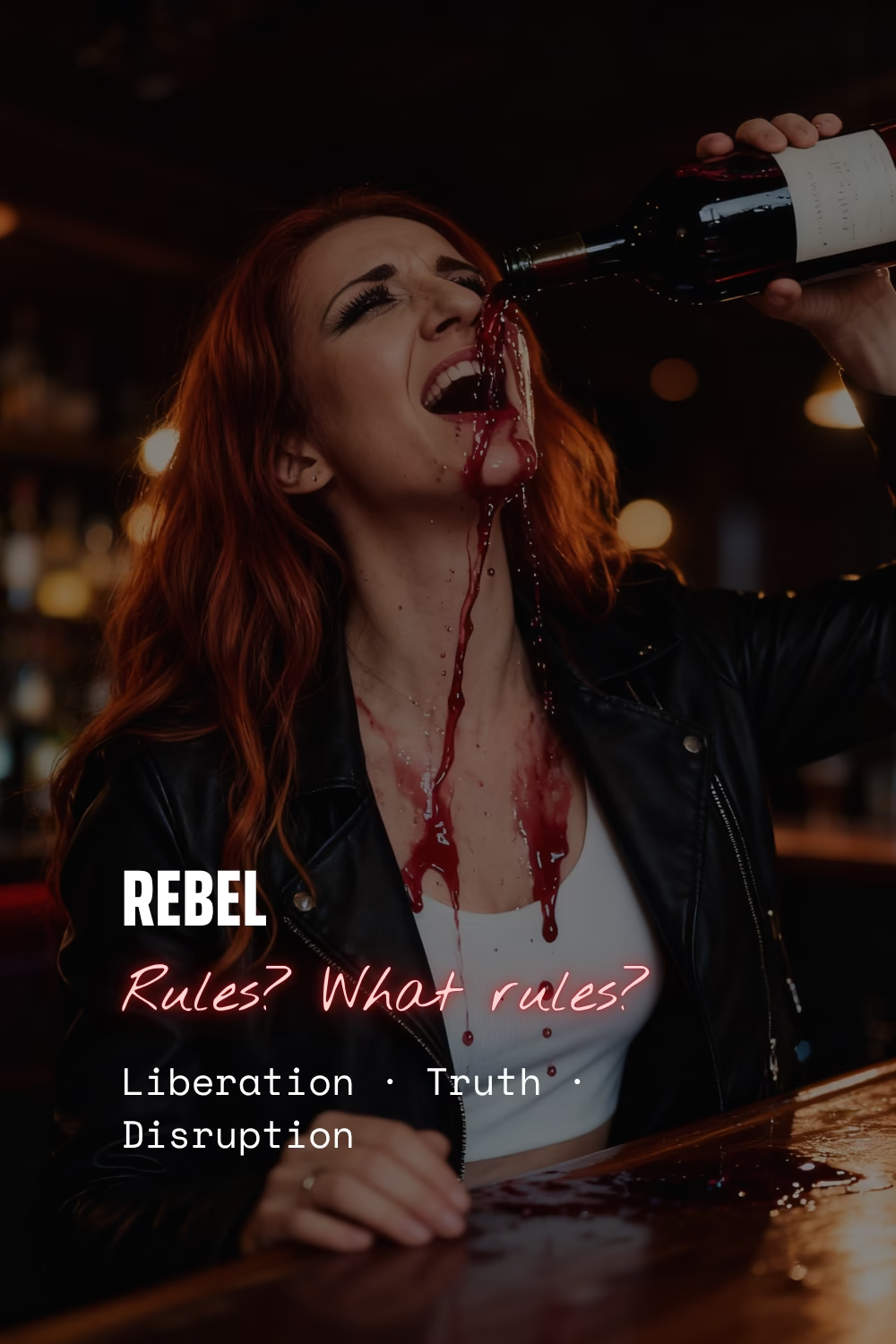 ^ this is an AI photoshoot. not a real photo.
A rebel brand can be soft. Not every rebel wears black. But the principle stays the same: contrast. An unexpected pairing that signals "I'm not following the format you expected." A pastel palette with brutal copy. A minimalist layout with one element that detonates the whole composition. That tension is the rebel signature.
How the Rebel Archetype Shows Up in Your Business
Rebel-led brands don't just look different. They operate differently. This is the part nobody writes about because most archetype articles stop at "use dark colors and be edgy." That's surface. I want to talk about what it actually means to run a business on rebel energy.
How rebels write
Direct. Short sentences that hit. Strategic profanity when it serves a point. No hedging, no "I think maybe possibly this could work for some people in certain situations." Rebels write with the confidence of someone who's lived what they're teaching and doesn't need your validation to keep going. The copy often starts with a provocation. Something that makes the wrong audience scroll away and the right audience lean in.
How rebels price
Unapologetically. Rebel brands don't explain their pricing with a wall of justification. The price reflects the value. If someone needs to be convinced, they're not the client. Distinctive pricing that doesn't round to industry defaults isn't a trick. It's a signal that this brand has its own system for everything, including the numbers.
How rebels handle "but everyone does it this way"
They don't. That sentence is the rebel's invitation to do the opposite. I stopped doing the webinar-pitch-email-bonus cycle because it made me feel like a telemarketer. I stopped following the "you need to post 5 reels a week" advice because it didn't match how I work. I built my own marketing model because the existing one was designed for people who aren't me. And it works better.
Who rebels attract and repel
Rebel brands attract people who are exhausted by cookie-cutter approaches. People who tried the templates, followed the formulas, did everything "right" and still felt like they were wearing a costume. They come to me because I don't put people in boxes. I'm a former lead auditor running a creative brand that combines songwriting, Human Design, AI production, and brand psychology. Most people can't deal with that range. And that's fine. The ones who can are exactly the ones I want to work with.
What rebels repel: anyone who wants to be told exactly what to do, step by step, no deviations. Anyone who needs external permission to make a move. The rebel methodology is personalized. I take a system and make it work for THAT specific person. If you want a template, I'm the wrong fit.
Rebel Archetype Customer Psychology
Famous Rebel Brand Archetype Examples
Most articles open with Harley-Davidson. And Harley-Davidson IS a rebel brand, but it's a specific kind: aspirational rebellion. Freedom as lifestyle aesthetic. The open road, the leather, the attitude. Nothing wrong with it. But it's rebellion for the feeling, not necessarily rebellion that changes a system.
I'm more interested in the rebels with a cause. The ones where the disruption actually dismantled something that needed dismantling.
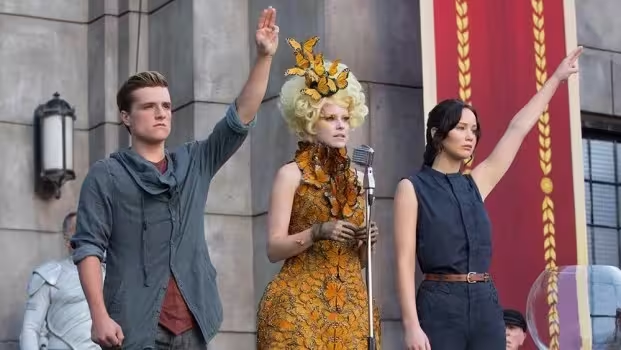
Katniss Everdeen
Reluctant rebel. Didn't choose revolution. Revolution chose her because she cared too deeply to stay quiet. Rebellion driven by love, not ego.
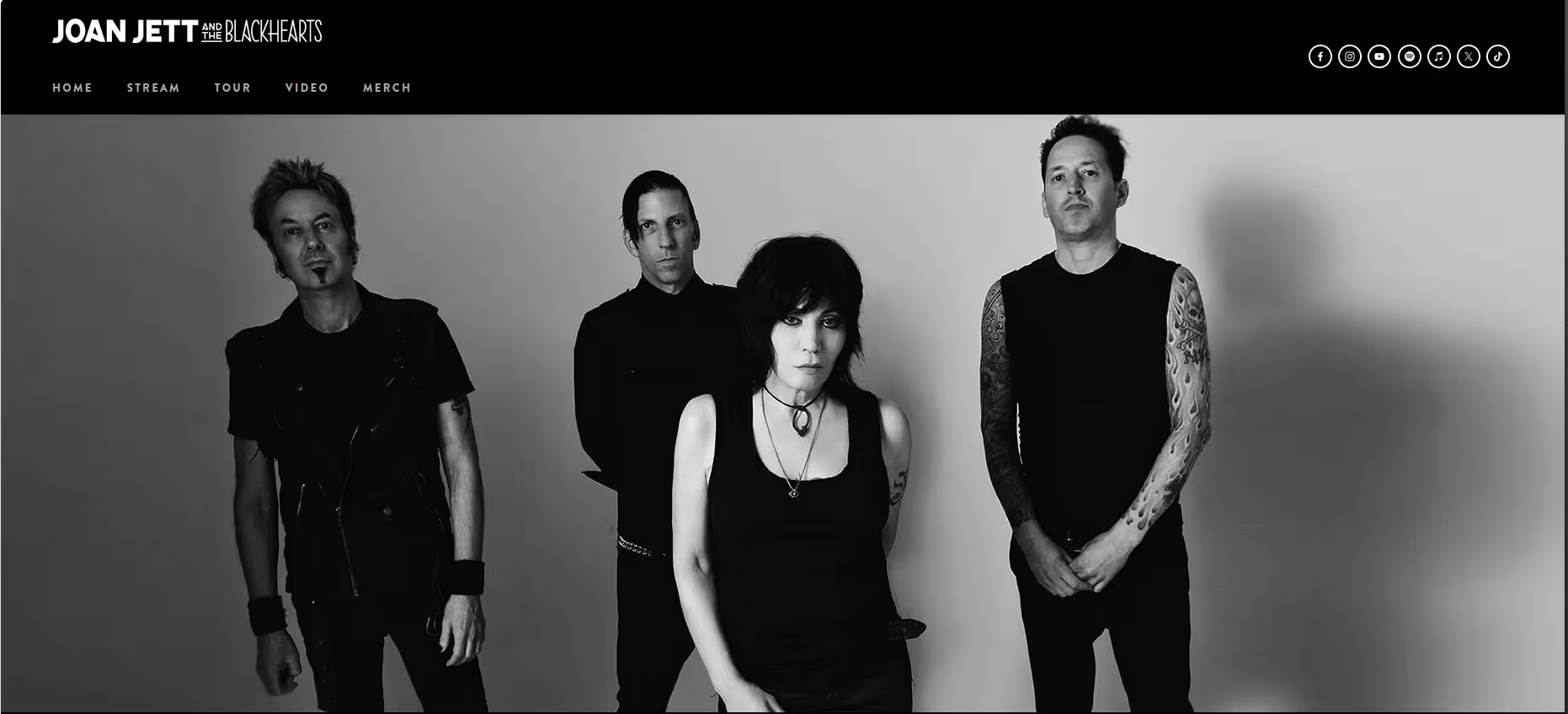
Joan Jett
Told women couldn't play rock. Built an entire career on proving them wrong without ever asking permission or softening the sound.
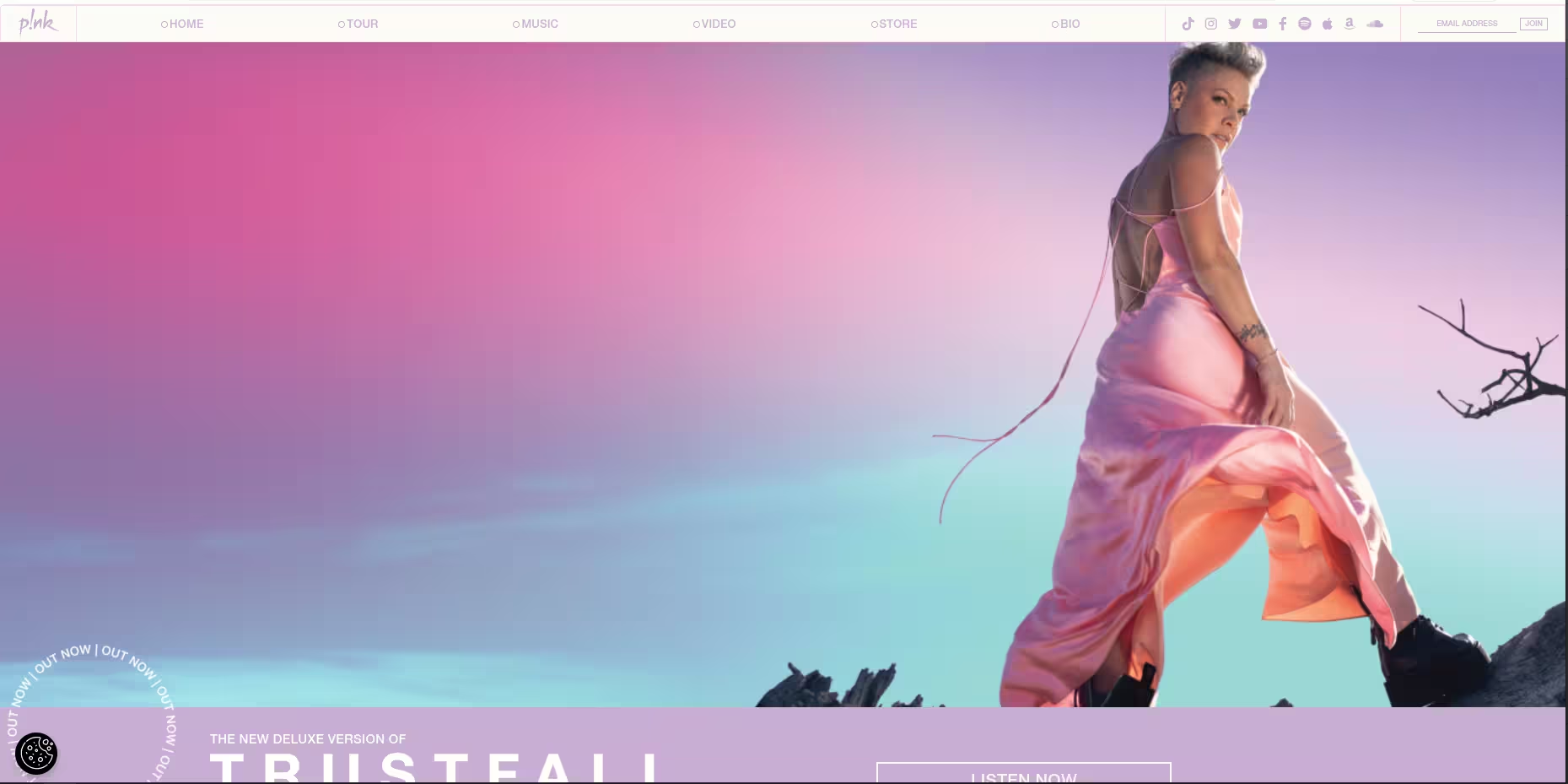
P!nk
Refused to be the pop star the industry wanted. Raw, athletic, outspoken. Built a 25-year career by being too real to manufacture.
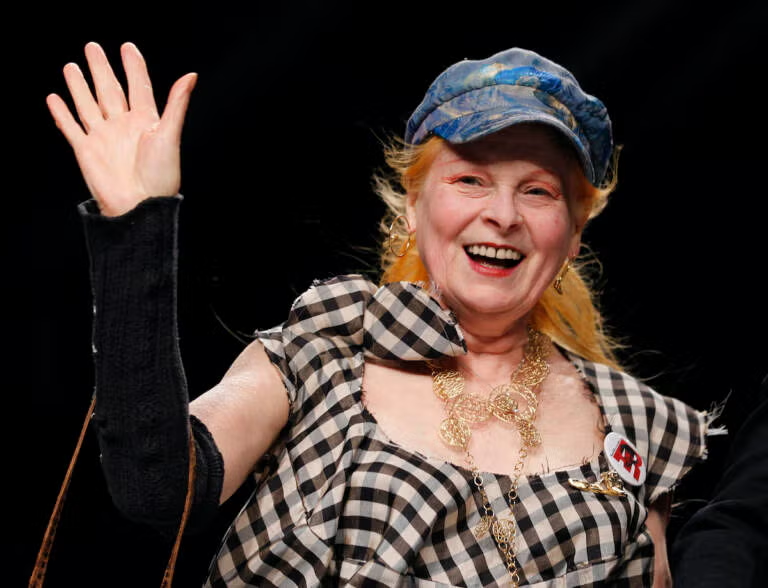
Vivienne Westwood
Used fashion as political disruption. Didn't just dress punk — she weaponized clothing as a statement against systems she believed were broken.
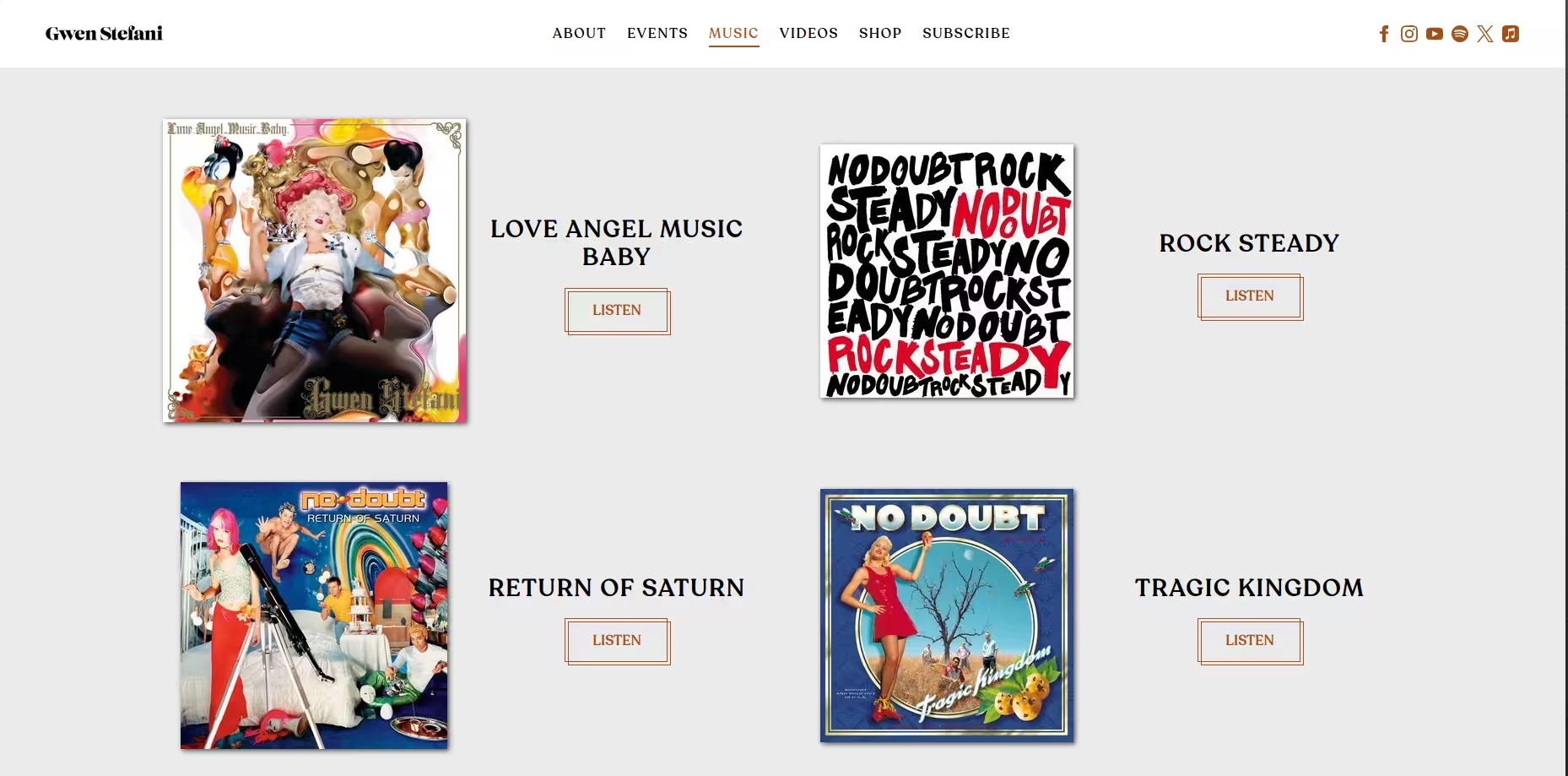
Gwen Stefani
Combined ska, punk, pop, and fashion into something no one could categorize. Refused to pick a lane. Became uncategorizable as the identity itself.

Furiosa
Drove a war rig into the desert because the system she served was monstrous. Zero monologues. Pure action. Rebellion that doesn't explain itself.
Rebel brands beyond Harley-Davidson
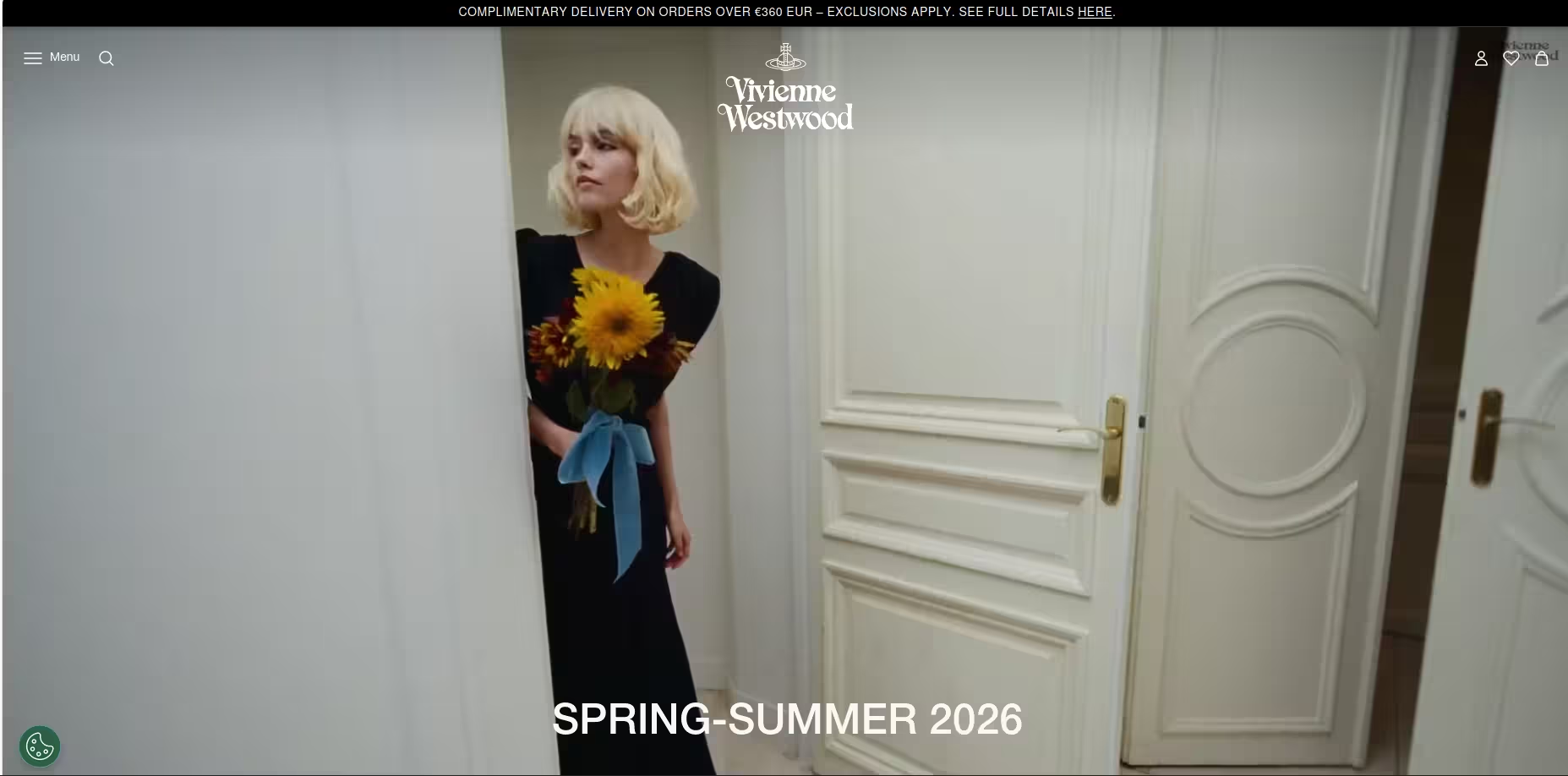
Vivienne Westwood
Fashion as political weapon
Built an entire fashion house that treated clothing as activism. Every collection made a political point. Every runway was a disruption. Rebellion embedded in the business model, not the marketing.
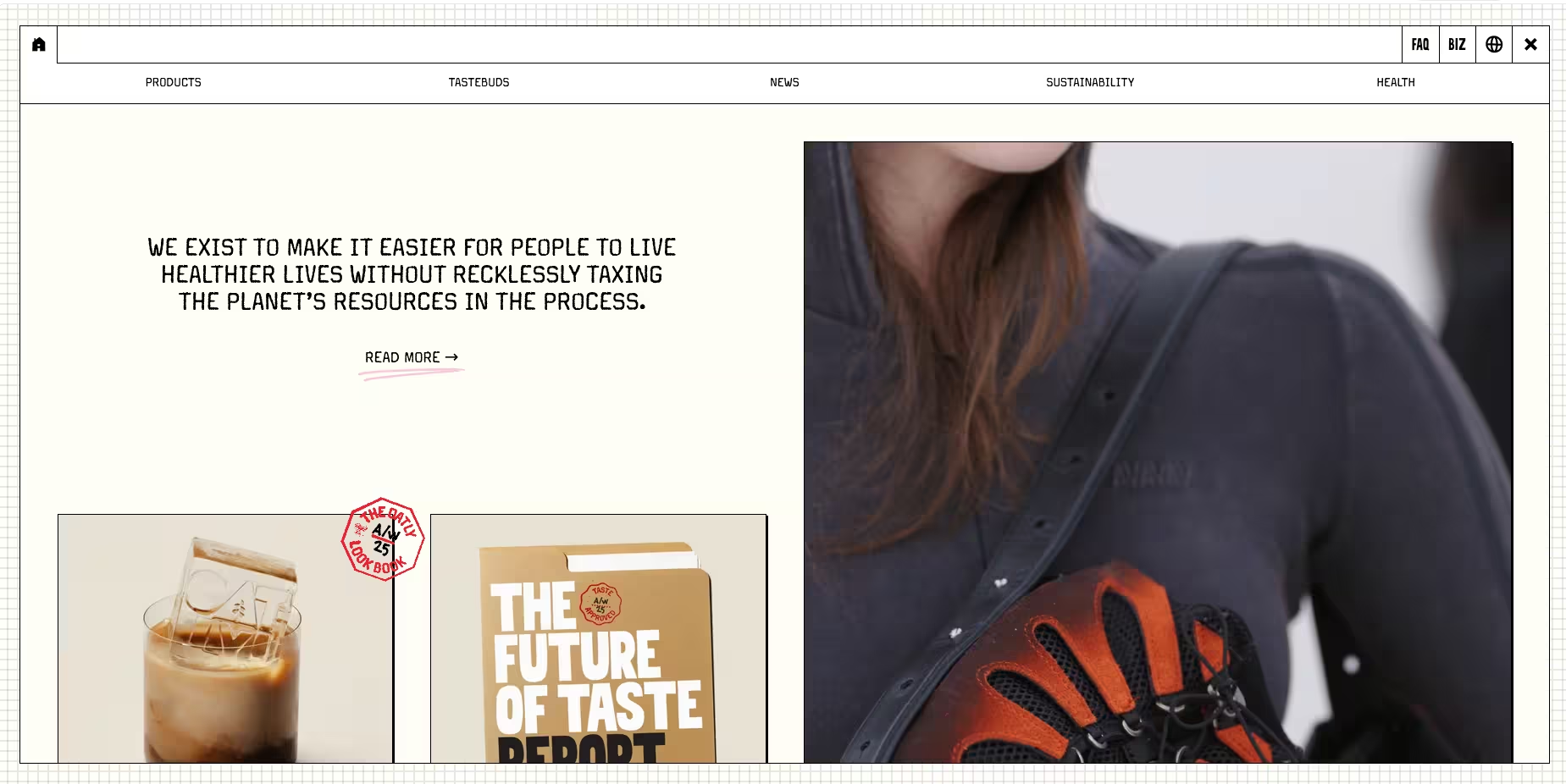
Oatly
Packaging as manifesto
Took on the dairy industry with copy so aggressive they got sued. Then put the lawsuit on their cartons. Rebellion with a cause, delivered with the kind of attitude that makes the establishment uncomfortable.
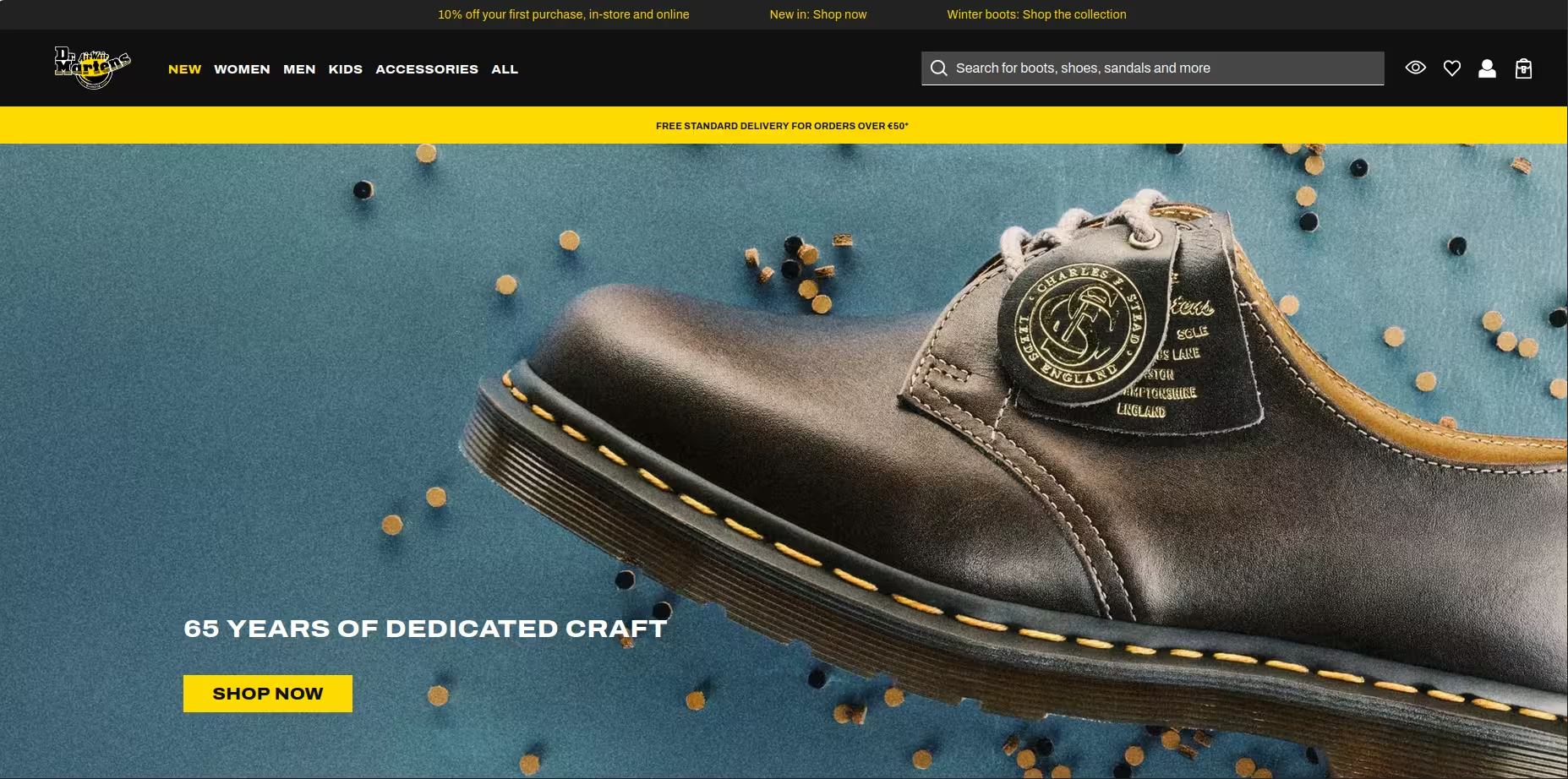
Dr. Martens
Workwear turned counterculture
Started as factory boots. Punk adopted them. Grunge adopted them. Queer culture adopted them. Dr. Martens didn't manufacture rebellion. They made something sturdy enough that real rebels chose it.
Rebel Brand Messaging Examples
Sample Headlines
Burn the rulebook. Build your own.
You're not here to fit in.
Normal is overrated.
For those who refuse to obey outdated systems.
From rebellion to revolution.
"If this triggers you, it's probably working."
Rebel Brand CTAs
Break the system
Rewrite the rules
Choose the untamed path
Step out of line
Marketing Strategy
Contrarian thought leadership, bold visuals, polarizing messaging, anti-guru positioning.
When It's a Costume vs. When It's Real
This is where I get opinionated, and I'm not going to apologize for it.
So many people in the online business world position themselves as rebels. The freedom gurus. The "fuck the rules" crowd. The ones who tell you to break free from the system, follow your own path, build your empire on your own terms.
And then you actually try to do something differently in their program and suddenly the flexibility disappears. The "freedom" only works if you follow their exact system. Their specific funnel. Their proven framework. Their 47-step process that everyone uses because everyone uses it.
That's not rebellion. That's a costume. And the worst part is, the people wearing it often don't even know it's a costume. They've internalized the aesthetic of rebellion without ever doing the uncomfortable work of actually going against the grain when it costs them something.
Real rebel energy shows up when someone is willing to lose the deal, lose the follower, lose the approval because what they're being asked to do conflicts with what they know is right. Katniss doesn't fire that arrow because it's good for her brand. She fires it because the alternative is participating in a system she can't stomach.
I see this with my clients too. One message I got from a client said it perfectly:
"That is absolutely genius, and it has confirmed my ideal client is set correctly. Finally, I wanna learn how to analyze this too. Fuck. Teach me."
Client · Brand Archetype AnalysisShe helps her own clients unfuck their brains. Strip away the strategies everyone told them to follow. Come back to who they actually are. And what my analysis did was confirm that the direction she was already being pulled toward was the one she was meant to go. Because that's the rebel's real challenge: everyone around you is telling you the path is wrong, and all you have is the bone-deep knowing that it's right.
The rebel moment isn't the leather jacket. It's finding the path outside the mold that lets you finally be you. And then having the guts to stay on it when the world tells you to get back in line.
What I Actually Rebel Against
People ask me this, so I'll answer it directly.
I rebel against the hustle model that tells people they need to grind harder, do more, add more tactics, post more content, and ignore what their body is telling them. I'm an advocate for a personalized approach that works for THAT specific person, not a one-size-fits-all framework someone is selling as gospel.
I rebel against an online business industry that has zero standards and profits off people's vulnerability. So many "experts" selling playbooks they've never used, strategies they've never tested, results they can't verify. I came from an industry where everything gets audited. Everything has to prove it works. I brought that precision with me.
I rebel against the Instagram-friendly version of Human Design that reduces people to types. "You're a projector, you have to rest." That's not how it works. I use specialized frameworks that apply Human Design to that specific person, their specific business, their specific questions. Not a generic formula that puts people right back into the boxes they were trying to escape.
And honestly, I rebel against the idea that women have to build businesses the way men have always done it. Women are not small men. We've been left out of the research, the models, the "best practices." So I build differently. I take systems, any system, and make them work for the actual person in front of me.
My specialty is matchmaking. This is your system. This is how it works for YOU. Not your business mentor. Not the person who sold you a course. You.
Frequently Asked Questions
Want to Know If This Is Actually Your Archetype?
Most people are a blend of two or three archetypes, not just one. The combination is what makes your brand distinct. I map this in an Oracle Session using Human Design, brand archetypes, and the structural read I trained inside almost a decade of quality auditing. You leave knowing exactly who your brand is, who it speaks to, and how to build it.
See If We're a Fit Or explore all 12 brand archetypes →If any link above has changed, check the Work With Me section in the menu for current offers.