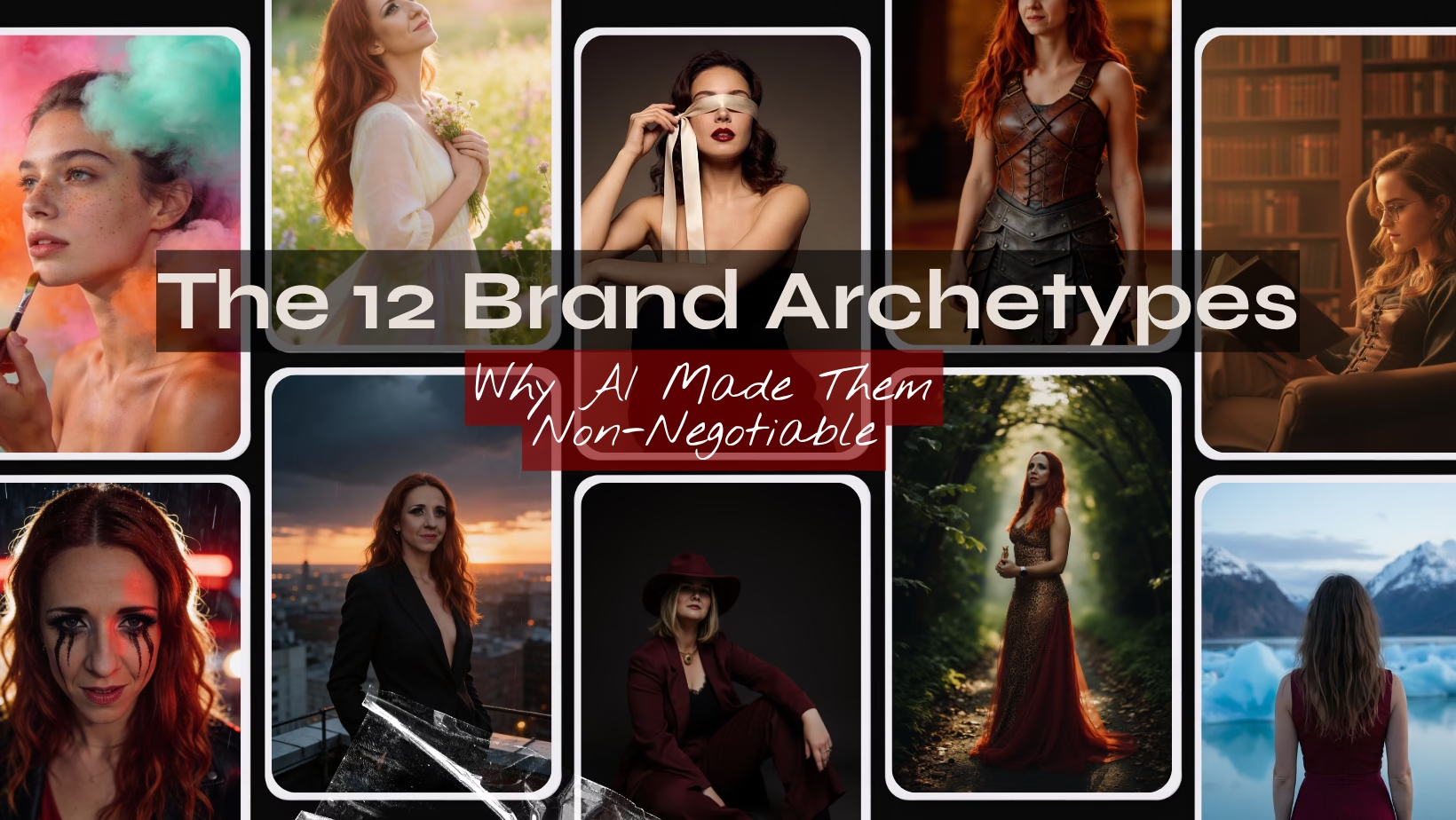
What Are Brand Archetypes?
Brand archetypes are 12 universal personality patterns based on Carl Jung's psychological framework. They define a brand's core identity, voice, visual style, and emotional connection with its audience.
The concept is nearly a century old. Jung mapped these patterns in the human psyche. In 2001, Margaret Mark and Carol S. Pearson brought the framework into branding with their book "The Hero and the Outlaw," showing how brands that tap into archetypal patterns create deeper emotional connections than brands that compete on features alone.
The psychology is real. The research is solid.
The way most people use it is completely broken.
Only a handful of creatives actually understand how brand archetypes work at a psychological level. Even fewer know how to apply them to a real brand. Most have absorbed this framework through Instagram infographics, AI-generated listicles, and quiz funnels that spit out a different result every time you take them.
That's not brand strategy. That's astrology for people who think astrology isn't rigorous enough.
Brand archetypes are supposed to be the backbone of your entire brand identity — your visual direction, your messaging, your content voice, your pricing psychology, your client attraction. When they're identified correctly, everything clicks. Your brand feels like a second skin instead of a costume you put on for Instagram.
When they're identified incorrectly — or worse, when you just pick the one that sounds coolest — you end up performing someone else's personality. And your audience can always tell.
Why Most Brand Archetype Advice Is Useless
I've worked with hundreds of entrepreneurs on brand identity. The pattern I see over and over is the same: they've already encountered brand archetypes somewhere, they've already "picked" one, and it's already not working.
Here's why.
The quiz problem. You take five brand archetype quizzes, you get five different results. One says you're a Sage. Another says Rebel. A third says Creator. You pick the one that sounds most appealing, build your entire brand around it, and three months later you're exhausted because nothing you create feels natural. The quiz measured your mood on a Tuesday afternoon, not your actual identity.
The costume problem. You choose the Rebel brand archetype because it sounds edgy and cool. But your actual energy is Sage — measured, analytical, depth-oriented. So you force yourself to write provocative content, use bold visuals, and "challenge the status quo" in your captions. Except it doesn't land. It feels like a performance. Your audience likes the posts politely but doesn't engage, doesn't share, doesn't buy.
You know that scene in Legally Blonde? Elle Woods shows up to a party in a full Playboy Bunny costume. Everyone else is in casual clothes. She's not wrong — she's just wearing someone else's idea of what she should be.
That's what it feels like when a brand strategist pushes you into a brand archetype that doesn't fit. You feel ridiculous and everyone can tell.
But here's what makes Elle Woods a masterclass in authentic archetype expression. She walks into Harvard Law the next day with her bright pink outfit, her fluffy pen, her sparkly laptop. Everyone stares. She doesn't change. She doesn't try to become the Sage or the Ruler to fit in. She stays exactly who she is — an Innocent-Lover-Hero blend with a strong Jester flavor — and she wins on her own terms.
THAT is what authentic brand archetype work looks like. You don't become someone else. You become more of who you already are.
The single-archetype trap. Most brand archetype guides tell you to pick ONE archetype and commit. That's like describing a human being with one adjective. Flat. Forgettable. Generic. And it's exactly why so many brands built on archetypes still look interchangeable — they're all performing the textbook version of one brand archetype instead of expressing a nuanced, layered blend.
The strategist problem. This one's the most damaging. Many brand strategists pick archetypes FOR their clients based on what they think will sell, not on who the client actually is. The client walks away with a brand that looks great on paper — polished mood board, cohesive color palette, professional copy — but feels like wearing someone else's clothes. They post content that sounds like someone else. They attract clients who don't fit. And they wonder why everything feels slightly off, all the time.
How I Actually Identify Your Brand Archetype
I don't use quizzes. I don't ask you to pick your favorite from a list. I don't guess based on your industry or your aesthetic preferences.
My process starts with conversation. I talk with you. I ask questions about what energizes you, what drains you, how you naturally communicate when nobody's watching, what kind of clients make you come alive and which ones make you want to throw your laptop out the window.
Then I use Human Design as a guide — a clue system, not a script. Your Human Design chart is calculated from your birth data, so it doesn't change based on your mood, what archetype sounds most marketable, or what your last business mentor told you to be. It reveals consistent energetic patterns that I cross-reference with everything you've told me in our conversation.
The chart gives me direction. The conversation gives me nuance. Together, they identify which brand archetypes are authentically yours — not the ones you aspire to, not the ones you think your audience wants, the ones that are already there in how you operate.
When a client hears their real archetype blend for the first time, the reaction is always the same. Not "oh, that's interesting." More like what Alessandra said — "FU*K. Teach me how to do this." Because it's that accurate. The feeling of being truly seen by your own brand for the first time. Recognition, not aspiration. "That's me" instead of "I wish that were me."
This is the core of my Archetype Twin™ framework. It connects three layers: identity mapping through conversation and Human Design, brand psychology through archetypes, and visual production through AI photoshoot technology that translates your archetype blend into images that look like YOU — not like a stock photo with a filter.
The identity comes first. Always. The visuals and messaging are built FROM it, not the other way around.
The 12 Brand Archetypes: Meanings, Personalities & Examples
All 12 brand archetypes organize around four fundamental human motivations. Understanding which motivation drives you narrows the field immediately — you're not choosing from 12 options, you're identifying which 3-4 archetypes share your core drive, then finding your specific blend within that group.
Stability & Control
These brand archetypes are driven by the need to create structure, provide care, and build something lasting. They thrive on bringing order to chaos and creating security for themselves and others.
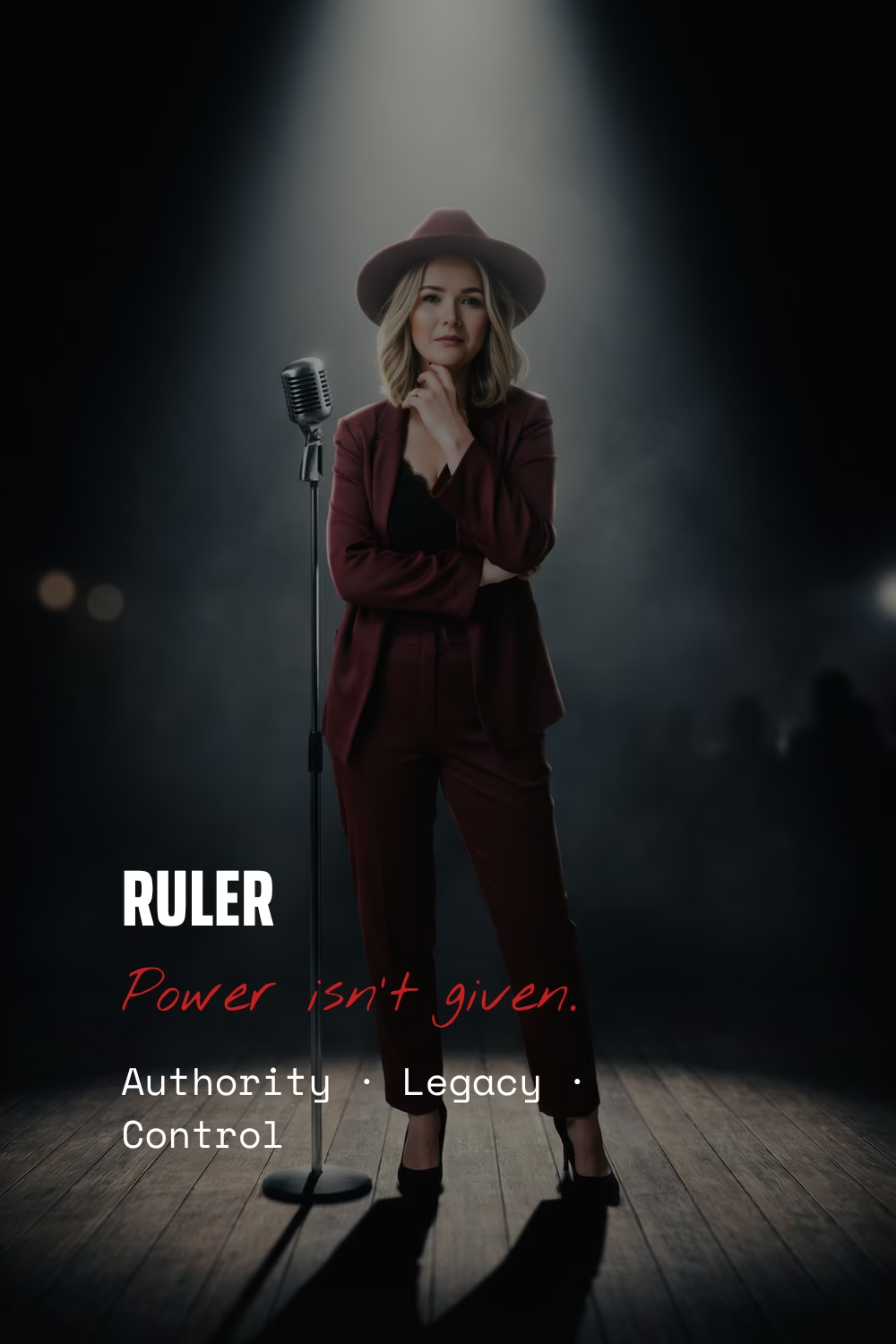
Ruler Brand Archetype
"Power isn't given. It's taken."
Think Miranda Priestly in The Devil Wears Prada. She walks into a room and the temperature changes. Standards exist because she set them.
The Ruler brand archetype is driven by a core desire for control, prosperity, and leadership. Their deepest fear is chaos — losing control, being overthrown, having their authority undermined. Their gift is confident leadership, accountability, and the ability to create order from nothing.
Ruler brands sound authoritative, refined, and precise. There's no hedging, no "maybe," no "it depends." They state what they know with the confidence of someone who's earned the right to say it. Visually, the Ruler brand archetype gravitates toward deep navy, gold, black, and royal purple — clean lines, elegant minimalism, luxury finishes.
Read the full Ruler brand archetype guide →
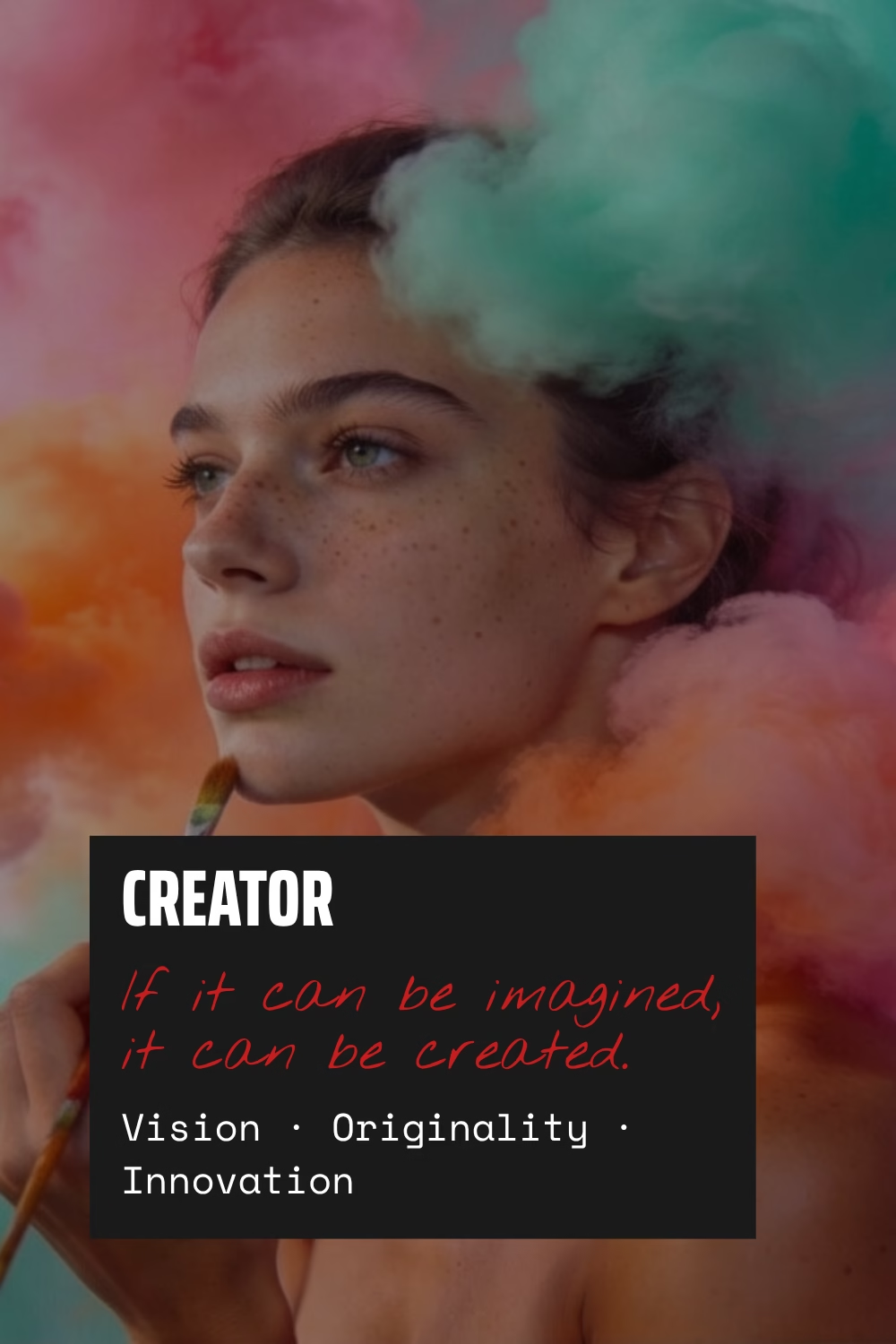
Creator Brand Archetype
"If it can be imagined, it can be created."
Think Willy Wonka. He doesn't just make chocolate — he builds entire worlds from his imagination. His process is eccentric, his vision is non-negotiable, and the result is something nobody else could have made.
The Creator brand archetype is driven by a desire to build something of enduring value. Their fear is mediocrity — a vision that falls flat, an execution that doesn't match the idea. Their gift is creativity, imagination, and the ability to bring something into existence that didn't exist before.
Creator brands sound inspiring, inventive, and encouraging. They talk about process, about vision, about the gap between idea and execution. Visually, the Creator brand archetype uses artistic details, organic forms, textured backgrounds, and expressive typography — lavender, peach, mint, and gold.
Read the full Creator brand archetype guide →
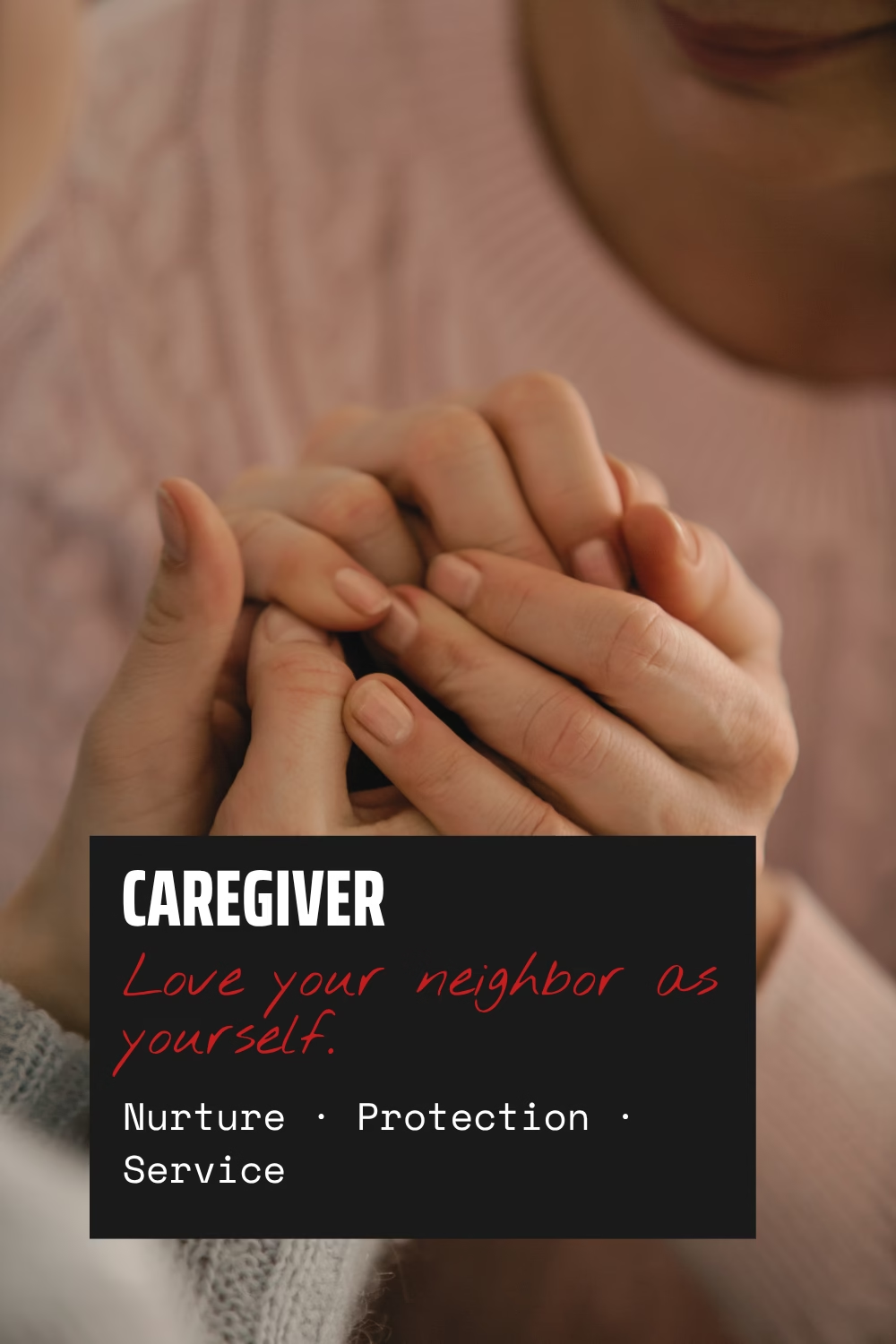
Caregiver Brand Archetype
"Love your neighbor as yourself."
Think Molly Weasley. She knits sweaters, feeds everyone who walks through her door, and will absolutely destroy you if you threaten her family. Nurturing warmth backed by fierce protection.
The Caregiver brand archetype is driven by a desire to protect and help others. Their fear is selfishness — the idea that they might not be doing enough for the people who need them. Their gift is compassion, generosity, and unconditional support.
Caregiver brands sound warm, reassuring, and service-oriented. They lead with "how can I help" and they mean it. Visually, the Caregiver brand archetype uses soft blues, sage greens, ivory, and rose — gentle textures, nurturing imagery, rounded typography.
Read the full Caregiver brand archetype guide →
Independence & Fulfillment
These brand archetypes seek personal growth, understanding, and authentic experience. They're motivated by self-discovery and finding meaning.
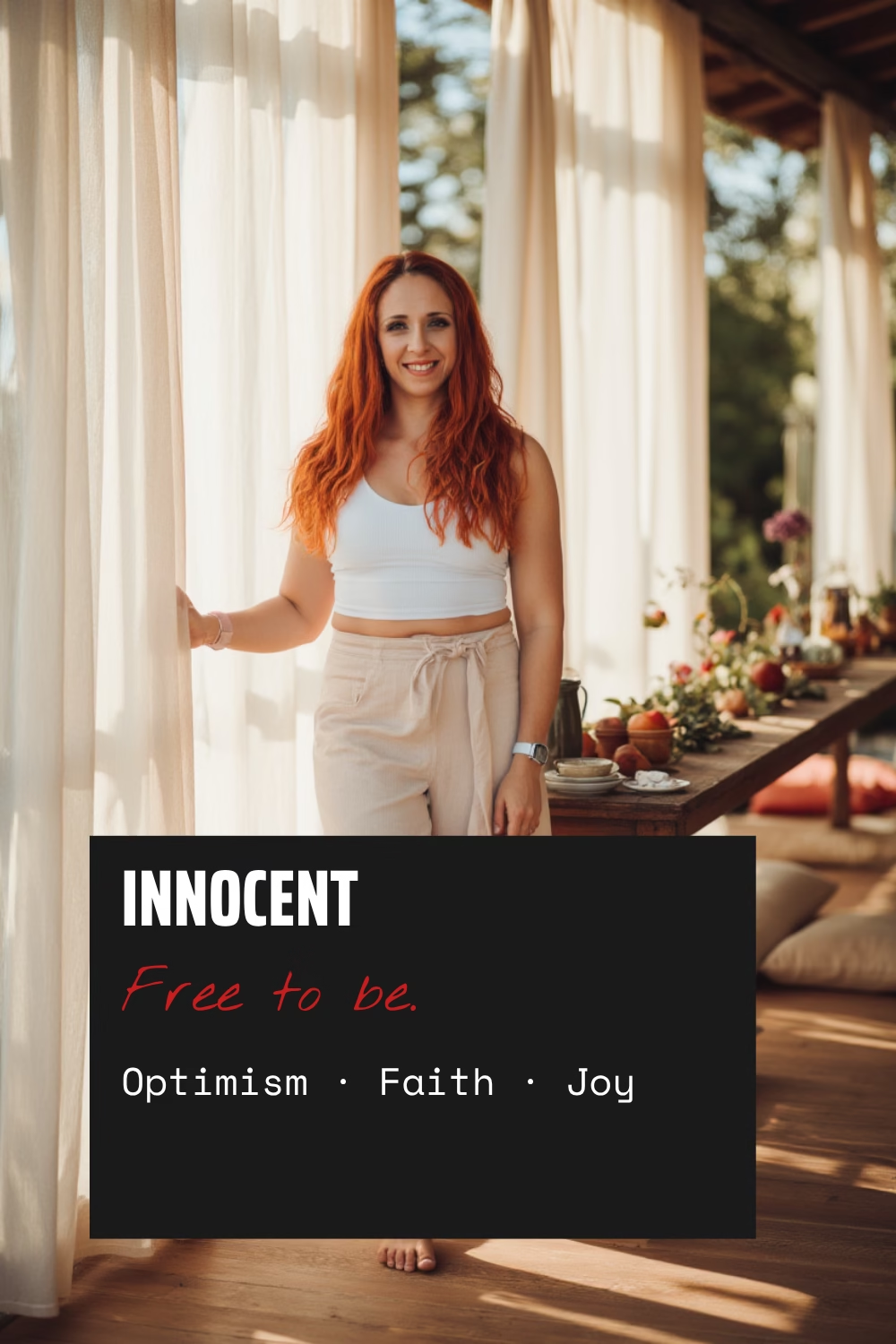
Innocent Brand Archetype
"Free to be."
Think Luna Lovegood. She sees beauty where others see nothing. She trusts her own perception even when everyone around her thinks she's strange. She's pure — not naive, but genuinely uncorrupted by cynicism.
The Innocent brand archetype is driven by a desire for happiness and simplicity. Their fear is doing something wrong — punishment, shame, getting it wrong. Their gift is optimism, faith, and the ability to find joy in the uncomplicated.
Innocent brands sound encouraging, pure, and genuinely positive — not toxic positivity, real positivity. They simplify without dumbing down. Visually, the Innocent brand archetype uses soft yellows, sky blues, whites, and pastel greens — clean designs, natural light, minimal fuss.
Read the full Innocent brand archetype guide →
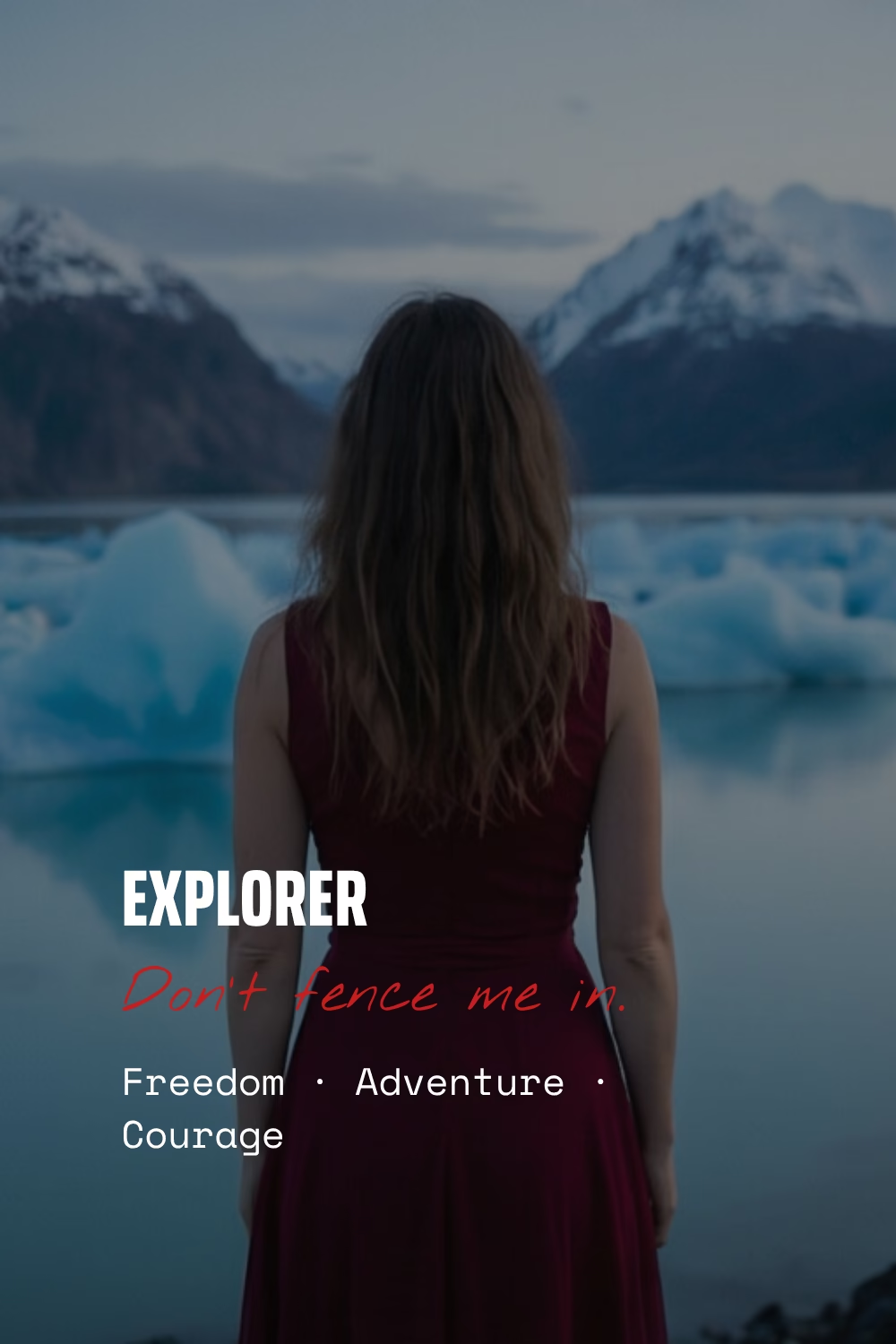
Explorer Brand Archetype
"Don't fence me in."
Think Lara Croft. She doesn't wait for an invitation. She goes where nobody else dares, on her own terms, and she's better equipped than anyone in the room.
The Explorer brand archetype is driven by a desire for freedom and authentic self-discovery. Their fear is being trapped — conformity, routine, anything that boxes them in. Their gift is independence, authenticity, and the courage to forge their own path.
Explorer brands sound bold, direct, and adventure-driven. They don't ask permission. Visually, the Explorer brand archetype uses forest greens, deep teals, burnt oranges, and earthy browns — rugged typography, nature imagery, a sense of movement.
Read the full Explorer brand archetype guide →
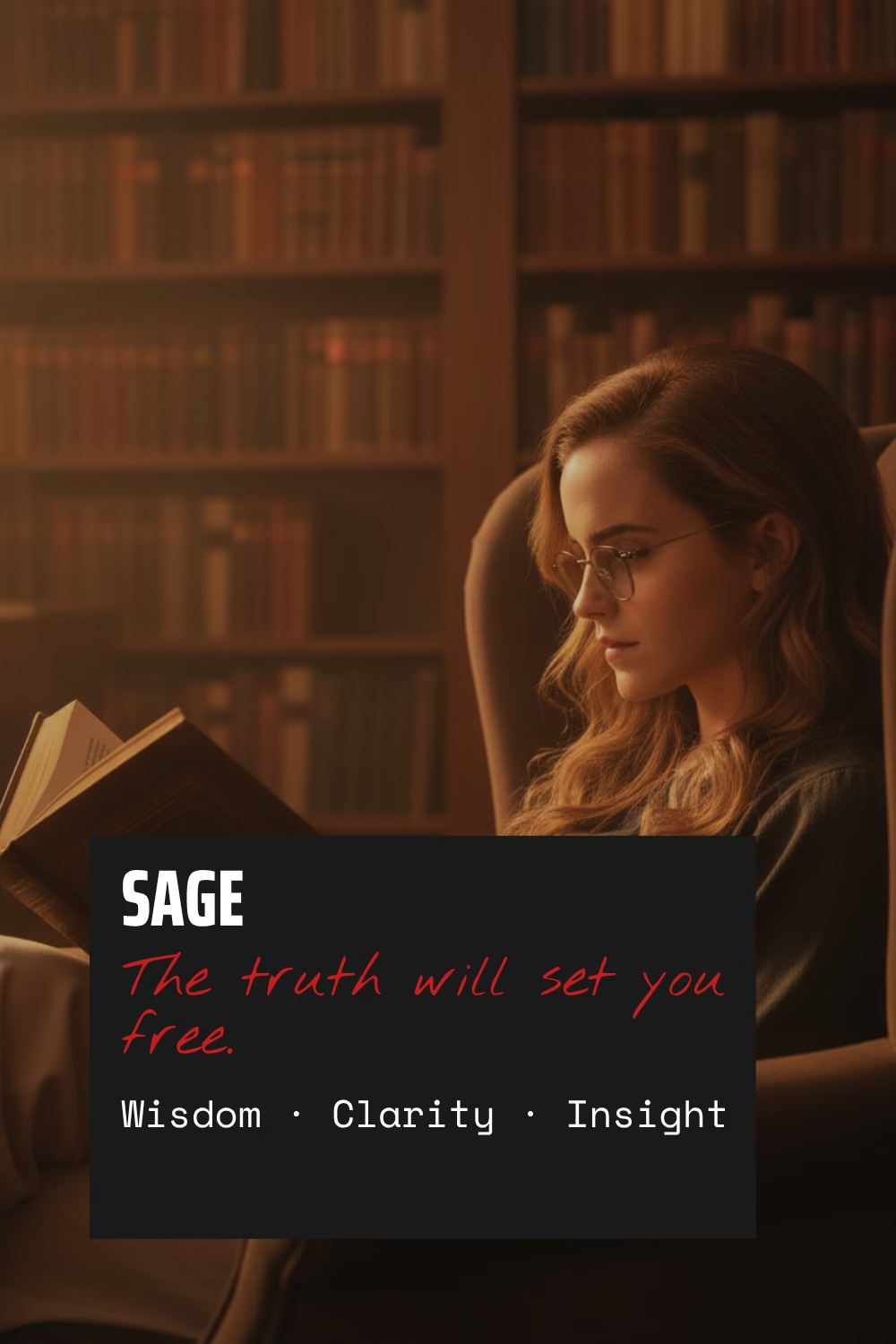
Sage Brand Archetype
"The truth will set you free."
Think Hermione Granger. She doesn't just collect knowledge — she USES it. She studies harder than anyone, and then she walks into the room and saves everyone with exactly the right spell at exactly the right moment. Knowledge as power, not knowledge as performance.
The Sage brand archetype is driven by a desire to understand the world and share that understanding with others. Their fear is ignorance — being misled, getting it wrong, appearing foolish. Their gift is wisdom, clarity, and the ability to make complexity accessible.
Sage brands sound thoughtful, precise, and grounded. They don't shout — they explain, and you listen because they've earned your trust through depth. Visually, the Sage brand archetype uses cool grays, deep blues, ivory, and forest greens — clean typography, understated elegance, lots of white space.
Read the full Sage brand archetype guide →
Notice something? Hermione, Luna, and Molly all live in the same story world — but they embody completely different brand archetypes. Hermione is pure Sage energy. Luna is Innocent. Molly is Caregiver down to her bones. Same ecosystem, completely different identities. That's exactly how archetypes work in real life too — your team, your friend group, your family. Different energies, same world. Each one irreplaceable.
Risk & Mastery
These brand archetypes are motivated by transformation and achievement. They're willing to take risks and face challenges to create change and prove their worth.
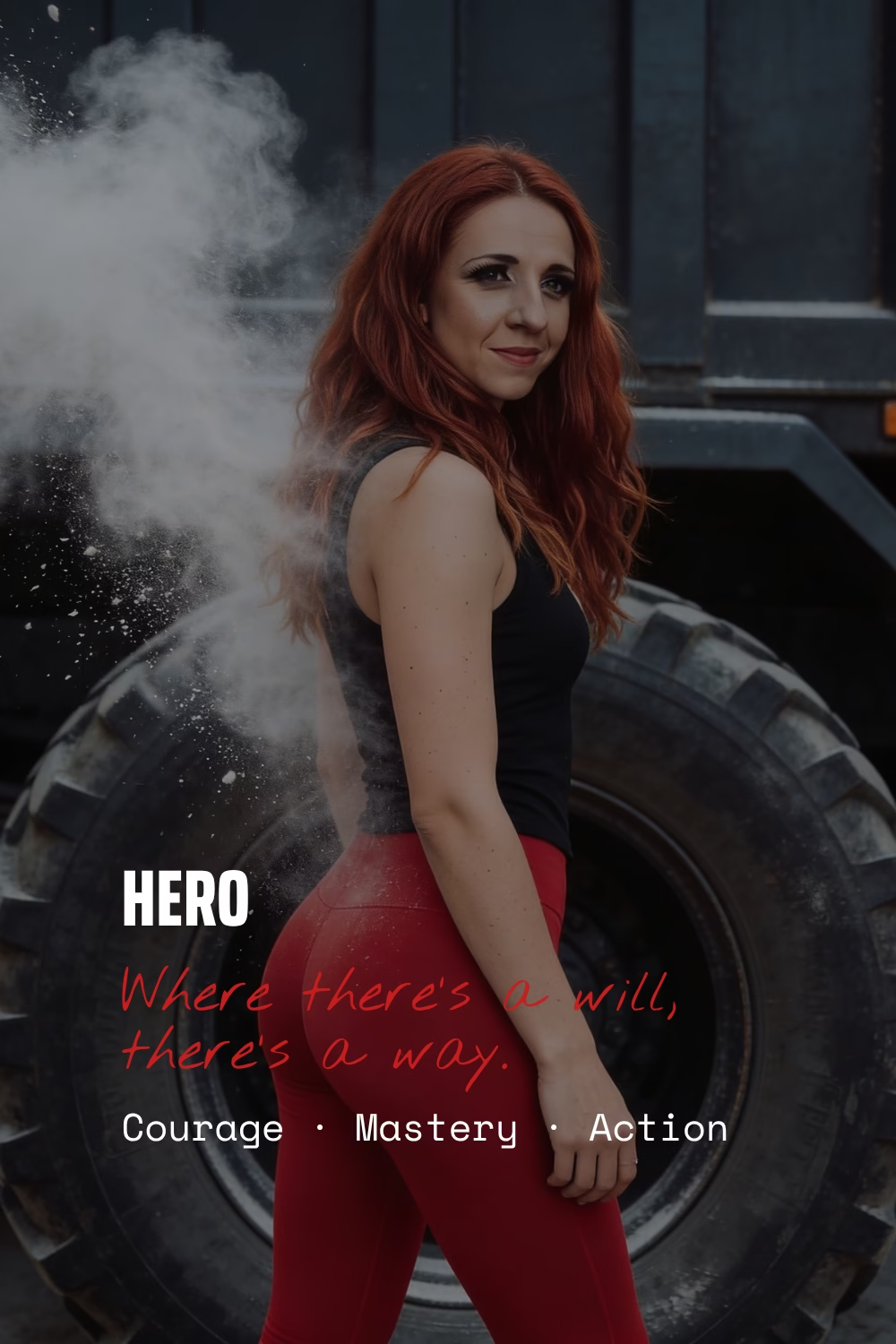
Hero Brand Archetype
"Where there's a will, there's a way."
Think Xena: Warrior Princess. She doesn't wait to be rescued. She doesn't ask for backup. She walks into impossible situations with a battle cry and a plan, and she gets the job done.
The Hero brand archetype is driven by a desire to prove their worth through courageous action. Their fear is weakness — being seen as incapable, failing to rise when it matters. Their gift is courage, determination, and the ability to inspire others to act.
Hero brands sound motivational, bold, and direct. They challenge you to be better without sugar-coating it. Visually, the Hero brand archetype uses bold reds, blacks, steel grays, and deep blues — dynamic imagery, sharp contrast, powerful typography.
Read the full Hero brand archetype guide →
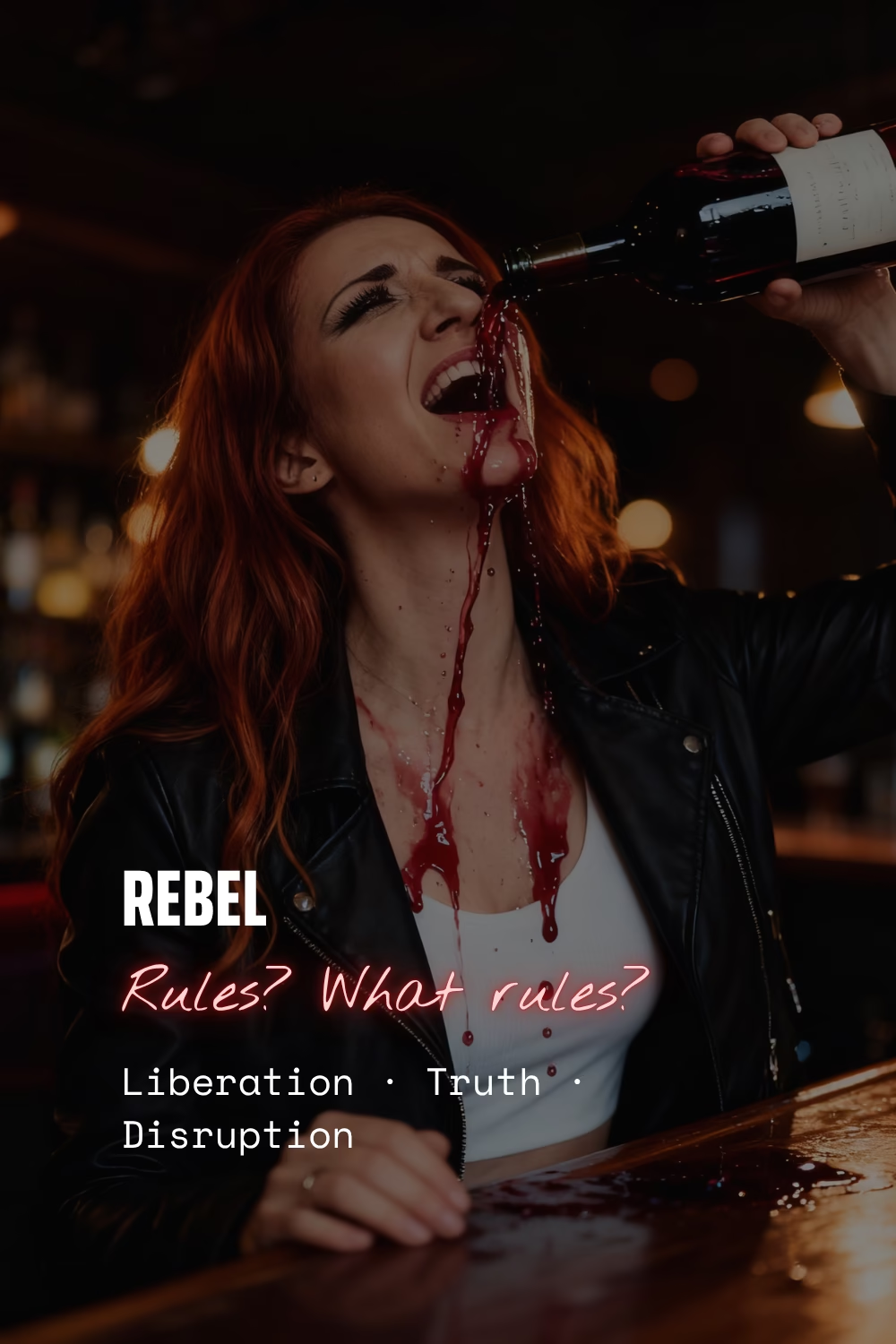
Rebel Brand Archetype
"Rules are made to be broken."
Think Katniss Everdeen. She doesn't rebel for attention. She doesn't break rules because it looks cool. She rebels because the system is broken and someone has to say it out loud.
The Rebel brand archetype is driven by a desire for revolution — overthrowing what isn't working and building something better. Their fear is powerlessness — being controlled, silenced, made irrelevant. Their gift is liberation, radical honesty, and the courage to say what everyone else is thinking.
Rebel brands sound provocative, direct, and fearless. They don't hedge. They don't soften. They say the uncomfortable thing and let it land. Visually, the Rebel brand archetype uses black, red, electric blue — high contrast, sharp angles, raw textures, editorial grit.
This is my primary archetype. 60% of my brand runs on Rebel energy. It's why my content sounds like this.
Read the full Rebel brand archetype guide →
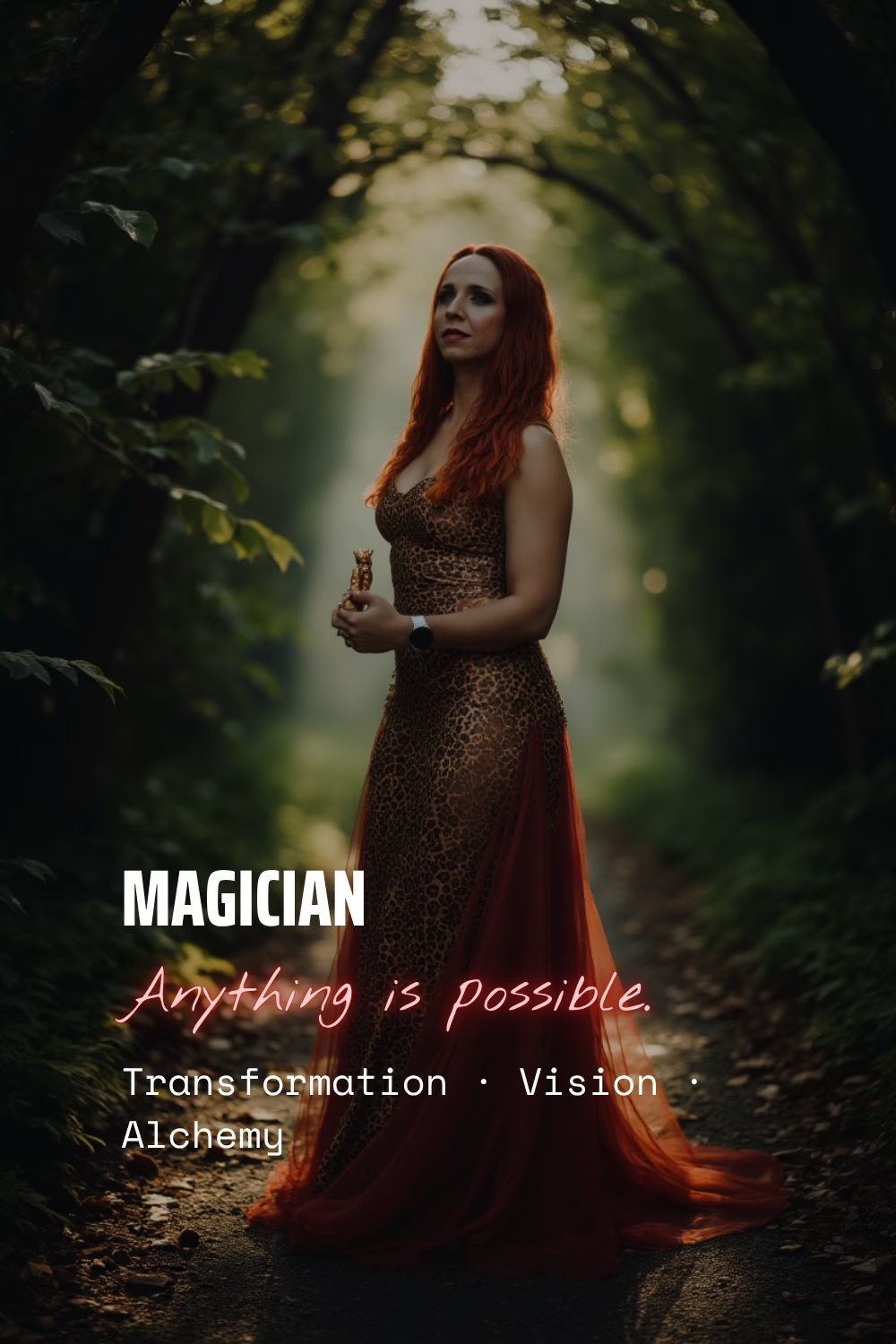
Magician Brand Archetype
"Anything is possible."
Think Elsa. She spends the first half of her story suppressing her power because she's been told it's dangerous. Then she lets go, and she transforms everything around her. That moment — from suppression to full expression — is the Magician brand archetype in its purest form.
The Magician brand archetype is driven by a desire to understand the fundamental laws of how things work and use that understanding to transform reality. Their fear is unintended consequences — power misused, transformation gone wrong. Their gift is vision, alchemy, and the ability to make the impossible feel inevitable.
Magician brands sound visionary, evocative, and precise. They don't promise magic — they demonstrate transformation through clarity and insight. Visually, the Magician brand archetype uses deep purples, midnight blues, silvers, and emeralds — cinematic depth, light and shadow, symbolic imagery.
This is my secondary archetype. The Magician energy shapes how I approach transformation with clients — the deep identity work, the shift from performing to embodying.
Read the full Magician brand archetype guide →
Belonging & Enjoyment
These brand archetypes are motivated by connection, community, and experiencing life. They seek to belong and bring joy to themselves and others.
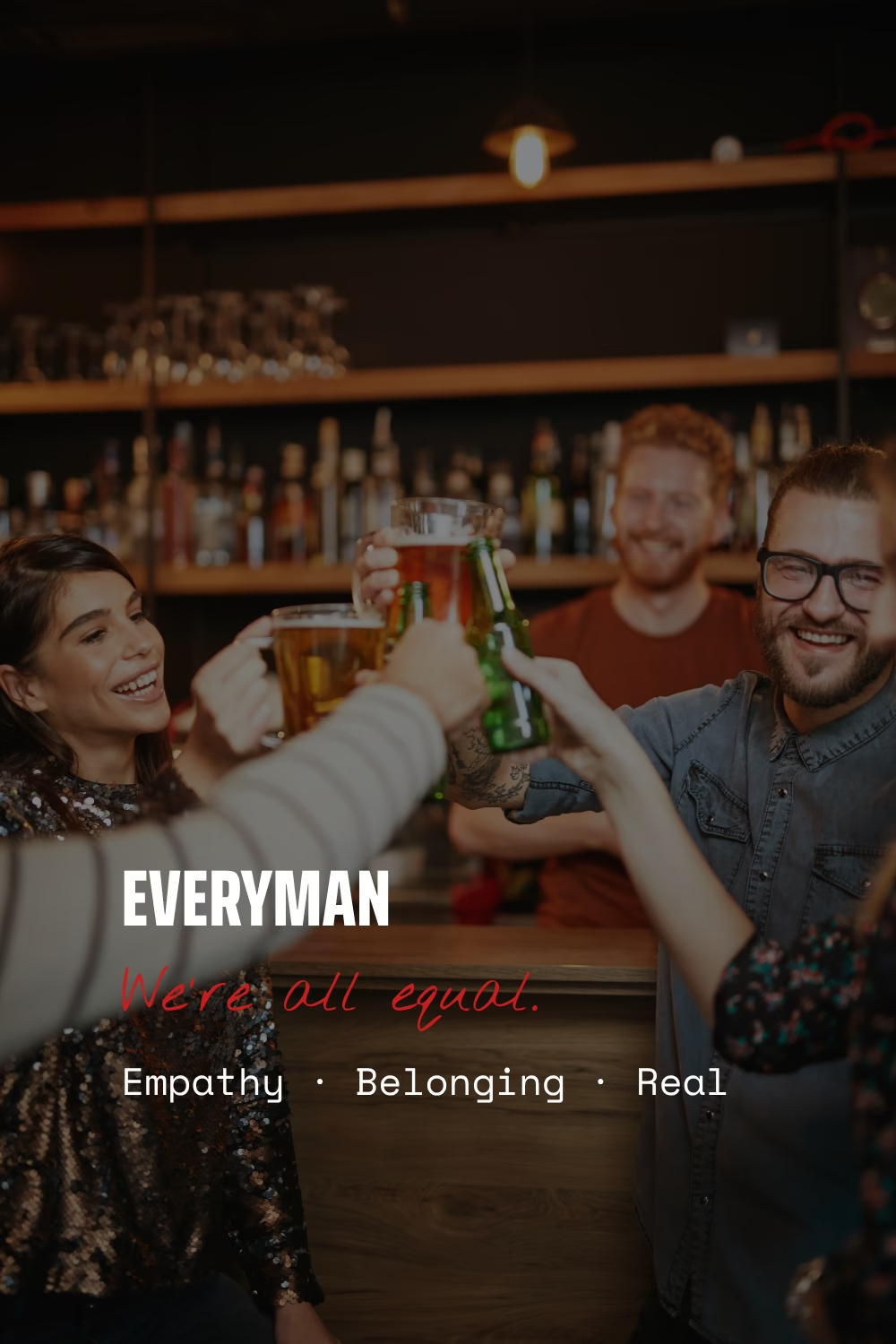
Everyman Brand Archetype
"All men and women are created equal."
Think Bridget Jones. Imperfect, self-aware, trying her best, endlessly relatable. She doesn't pretend to have it together. She shows up as she is, and you love her for it.
The Everyman brand archetype is driven by a desire to belong and connect. Their fear is standing out too much — being excluded, rejected, seen as "too much" or "not enough." Their gift is empathy, authenticity, and the ability to make everyone feel welcome.
Everyman brands sound friendly, conversational, and inclusive. No jargon, no pretension, no hierarchy. Visually, the Everyman brand archetype uses denim blues, warm browns, olive greens, and soft grays — approachable styling, real-people imagery, nothing too polished.
Read the full Everyman brand archetype guide →
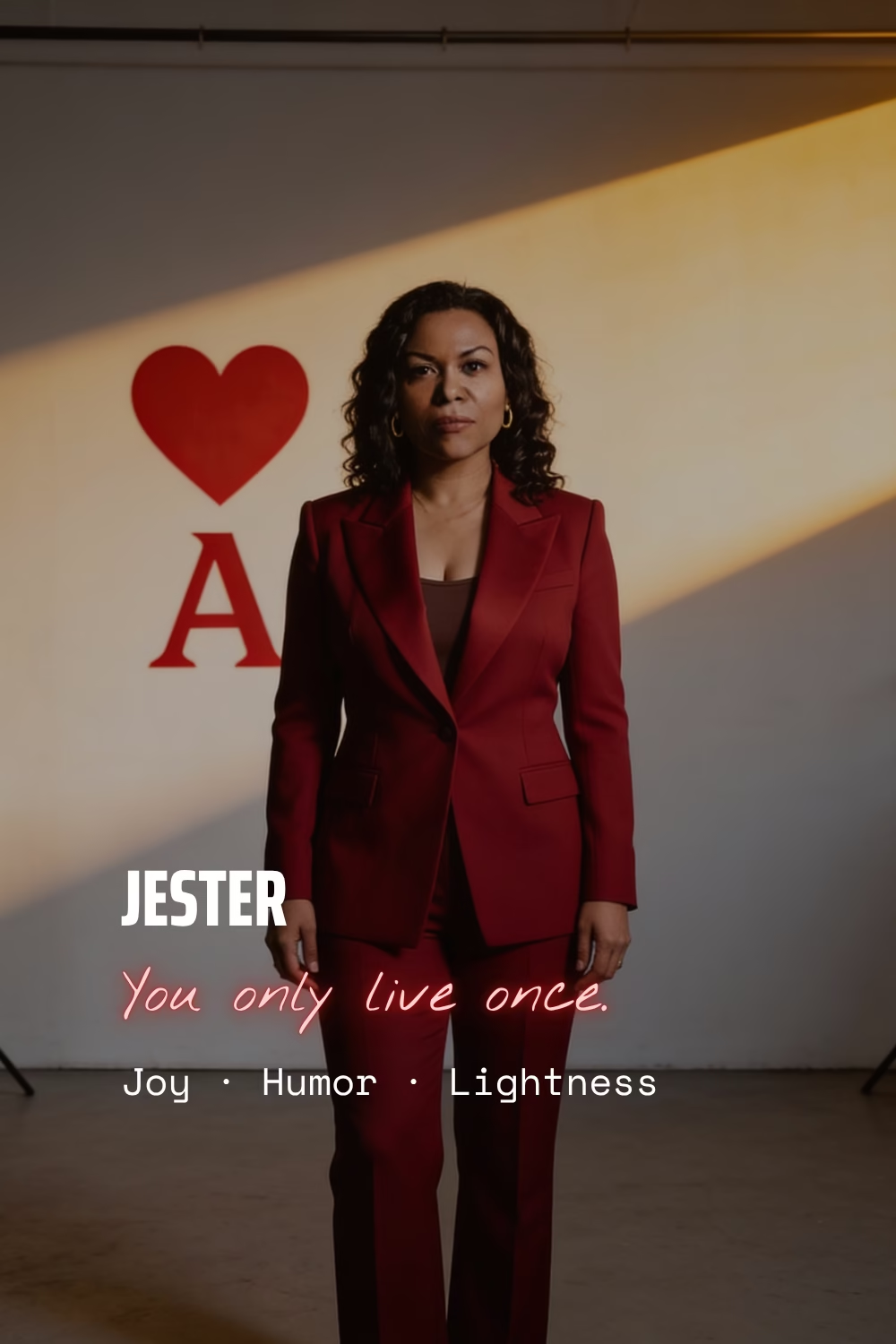
Jester Brand Archetype
"You only live once."
Think Amy Schumer. She says things nobody else will say, she makes you laugh while she does it, and underneath the comedy there's always a sharp observation about how the world actually works.
The Jester brand archetype is driven by a desire to live in the moment with full enjoyment. Their fear is boredom — being irrelevant, being forgotten, being too serious to connect with. Their gift is joy, humor, and the ability to make people let their guard down.
Jester brands sound playful, cheeky, and surprising. They use humor as strategy, not decoration — every joke serves a purpose. Visually, the Jester brand archetype uses vibrant yellows, turquoises, lime greens, and bright oranges — bold patterns, unexpected elements, energy in every pixel.
Read the full Jester brand archetype guide →
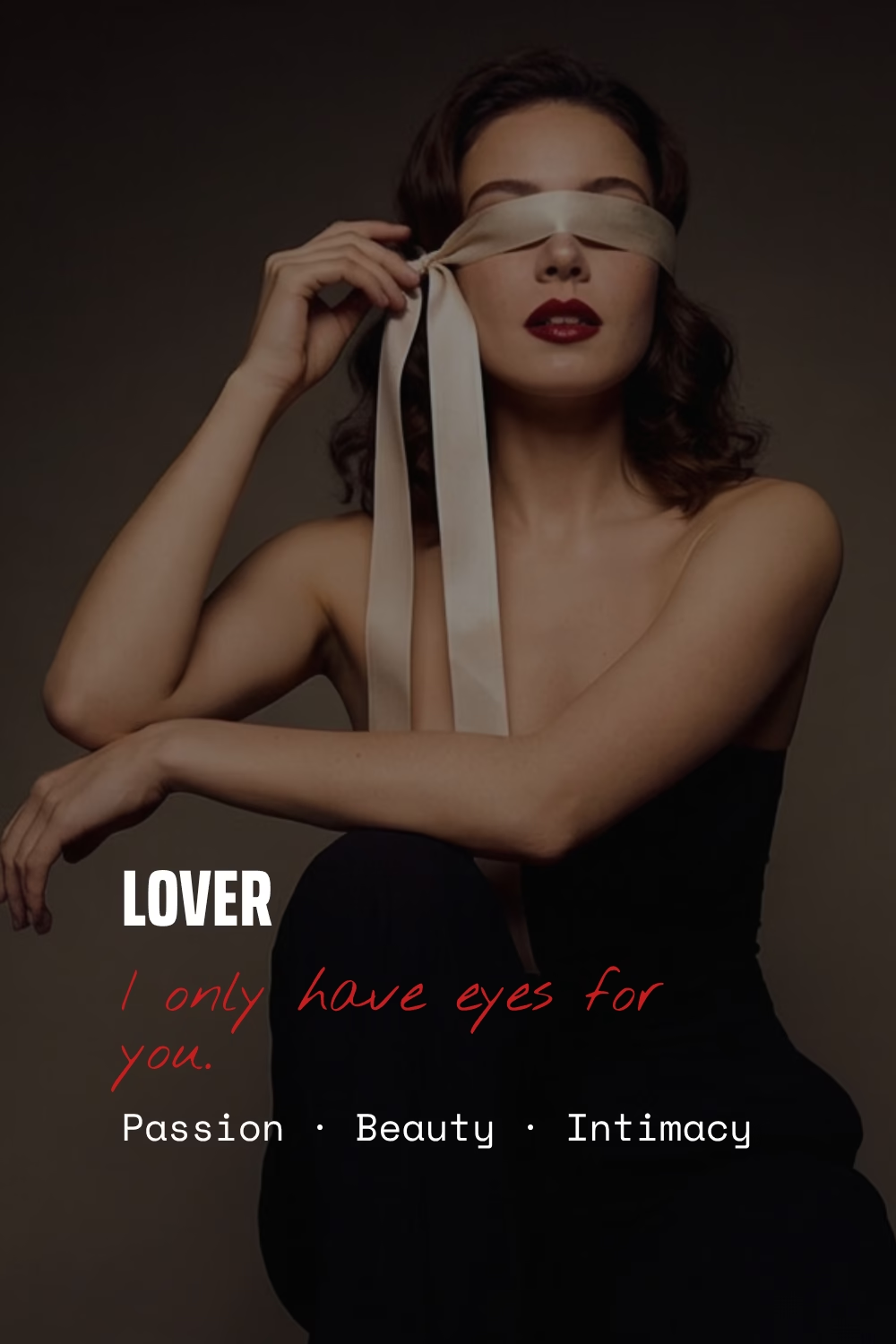
Lover Brand Archetype
"I only have eyes for you."
Think Marilyn Monroe. Magnetic, sensual, impossible to look away from. She didn't try to be beautiful — beauty was her natural frequency, and everything she touched became more alive because of it.
The Lover brand archetype is driven by a desire for intimacy, beauty, and deep emotional connection. Their fear is being alone — unwanted, unseen, unloved. Their gift is passion, appreciation, and the ability to make people feel truly seen and desired.
Lover brands sound warm, evocative, and intimate. They speak directly to desire — not in a manipulative way, but in a way that makes you feel worthy of beautiful things. Visually, the Lover brand archetype uses deep reds, blush pinks, rose, and cream — lush textures, elegant details, soft lighting.
Read the full Lover brand archetype guide →
Why Your Brand Is a Blend (and Why That's the Point)
If you read through those 12 brand archetypes and thought "I'm three of those" — you're right. You probably are.
Most magnetic brands are blends of 2-4 archetypes with one leading. A single archetype gives you a category. A blend gives you a personality.
I'm 60% Rebel, 30% Magician, 10% Creator.
The Rebel leads my voice and positioning. It's why my content sounds direct, why I challenge things other brand strategists won't touch, why my clients find me refreshing instead of "another one of those."
The Magician shapes how I approach transformation. The deep identity work, the shift from performing to being, the moment a client sees their real archetype blend and their whole body relaxes because they finally have permission to stop pretending.
The Creator shows up in the frameworks and systems I build. The Archetype Twin™ methodology, the AI photoshoot process, the way I structure brand architectures — that's Creator energy expressed through precision.
If I tried to lead with Creator, my content would lose its edge. If I dropped the Magician entirely, my work would lose its depth. If I suppressed the Rebel, I'd sound like every other brand strategist with a mood board and a candle in the background.
Your blend works the same way. One archetype leads. The others add dimension. The combination is what makes you impossible to replicate — by competitors OR by AI.
That's the entire point.
In a world where AI can generate brand content that sounds like anyone, your authentic archetype blend is the one thing it can't fake. AI can mimic a Rebel tone. It can imitate Sage authority. It can produce Lover warmth. What it can't do is hold the tension between your specific combination of archetypes — the way your Rebel energy gets tempered by Caregiver compassion, or your Sage precision gets ignited by Explorer restlessness.
Your blend is your fingerprint. And most people have never identified theirs correctly.
Brand Archetype Questions I Get Asked Most
What are the 12 brand archetypes?
The 12 brand archetypes are Ruler, Creator, Caregiver, Innocent, Explorer, Sage, Hero, Rebel, Magician, Everyman, Jester, and Lover. Each represents a universal personality pattern based on Carl Jung's psychological framework, adapted for branding by Margaret Mark and Carol S. Pearson. They define a brand's core motivation, voice, visual identity, and emotional resonance with its audience.
How do I find my brand archetype?
Most people use online quizzes, which give inconsistent results because they measure conscious preferences rather than authentic identity. I use Human Design analysis combined with in-depth conversation to identify brand archetypes based on consistent energetic patterns that don't change with your mood. The result is an archetype blend — typically 2-4 archetypes — that reflects who you actually are, not who you think you should be.
Can I have more than one brand archetype?
Yes — and you almost certainly do. Most compelling brands are blends of 2-4 archetypes with one leading and the others adding depth. A single archetype creates a flat, generic brand. A blend creates a layered personality that feels human and memorable.
What's the difference between brand archetypes and brand personality?
Brand archetypes are the psychological foundation — the core motivations, fears, and desires that drive your brand. Brand personality is the expression of that foundation through specific voice, visuals, messaging, and behavior. Archetypes are the roots. Personality is what grows from them.
How do brand archetypes help with marketing?
Brand archetypes give you a decision-making framework for everything — which colors to use, how to write your copy, what content to create, how to price your offers, which clients to attract and which to repel. Instead of guessing what "feels right," you have a psychological foundation that makes every brand decision consistent and intentional.
Do brand archetypes work for personal brands?
They're essential for personal brands. When your brand IS you, the gap between your real personality and your brand personality shows up fast. Brand archetypes give personal brands a framework to express authentic identity consistently — across platforms, offers, and growth stages — without losing themselves in the process.